
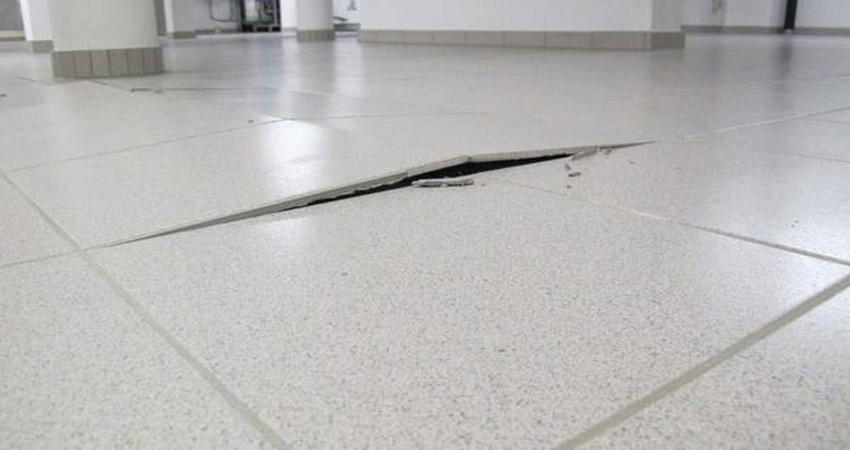
That yard floor that humps every time it rains.
Have you ever experienced this, or seen it at a friend’s house? A beautiful yard paved with stone or tile — everything neat and level. But when the first autumn rain falls, things change. Some stones suddenly rise up. Flowerpots that were sitting on the ground tilt and become unbalanced. You might even hear the sound of tiles cracking.
Many people think the problem lies with the tile or stone itself — but they’re wrong. The root cause is elsewhere. In this article, we want to understand how rainwater can hollow out the ground beneath a seemingly solid floor, what property of the soil beneath the yard causes it to swell when exposed to water, and — more importantly — if this has happened to your yard, how you can stop the damage from getting worse.
Is the soil under your yard clay or sand?
Through which paths does rainwater make its way under the paving?
How can we prevent clay soil from swelling before laying the paving?
Now that your yard has heaved, what’s the solution?
Is the soil under your yard clay or sand? (Know the deadly difference between the two.)
Let’s get to the main issue. What causes your yard floor to swell after rain, push itself upward, and make flowerpots tilt has nothing to do with the tiles or stones. The real culprit is the soil beneath the paving. Soils are different. Some behave normally when exposed to water, while others act strangely and dangerously.
There are two main types of soil: sandy soils and clay soils. Sandy soil works like a sieve. Water easily passes down between its particles. If the soil under your yard is sand, when it rains, the water quickly drains deep into the ground, and that’s it — nothing happens. The paving doesn’t rise.
But clay soil is a completely different story. Clay particles are very fine and egg-shaped. These particles have a strange property. When they are dry, they remain compacted and stuck together. But as soon as water reaches them, they open up like a sponge. Water enters between the clay particles and pushes them apart. The result is that the volume of clay soil expands several times. In construction science, this phenomenon is called soil swelling or heave.
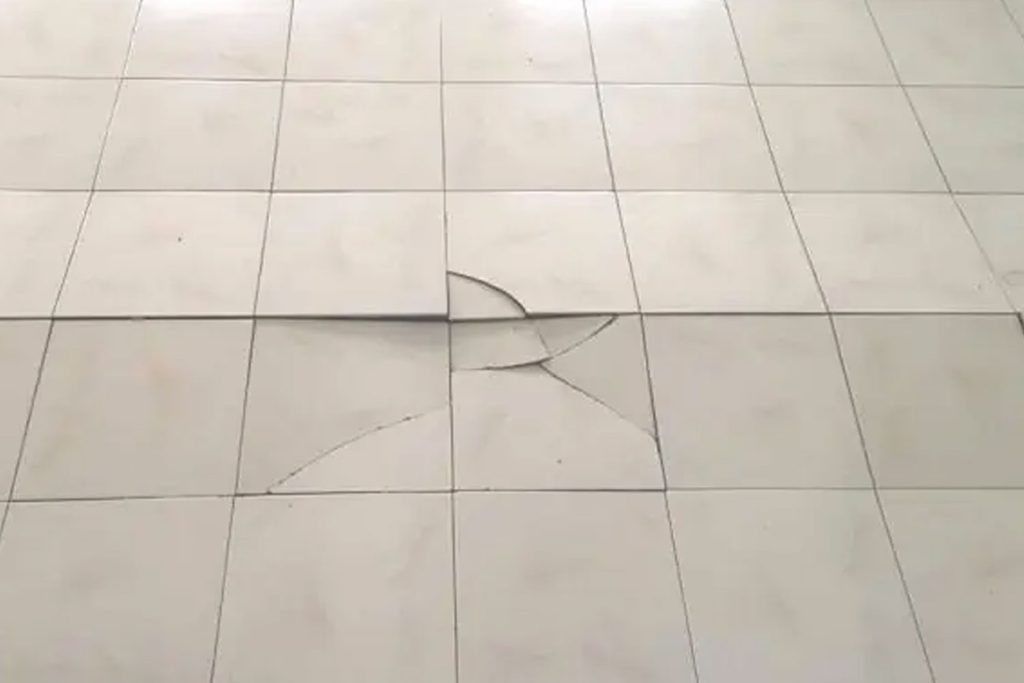
Now imagine there is a layer of compacted clay soil beneath your yard floor. This layer has been dry for years, and nothing has happened. But then a heavy rain falls. Water seeps through the joints in the paving and penetrates below. The thirsty clay soil sees the water and begins to swell. Its volume increases. That extra volume has nowhere to go. So it pushes upward against the paving above. The tiles and stones bend, rise up, and the flowerpots on top become tilted.
This pressure is sometimes so strong that it can crack thick tiles.
So the first step to solving this problem is to find out what kind of soil lies beneath your yard. A simple way is to dig a small hole, take some soil, add a little water, and see what happens. If it becomes sticky like wet dough and cracks when it dries, it contains clay. If it acts like loose sand and water passes through it, then it’s sandy soil.
Now we move on to the next part: how water finds its way to reach beneath the paving.
Through which paths does rainwater make its way under the paving?
We said that clay soil by itself isn’t dangerous. As long as water doesn’t reach it, nothing happens. The problem starts when water finds a way to get under the paving and into the clay soil. Now let’s see what paths rainwater takes to infiltrate.
First: the joints between tiles and stones
No paving is completely seamless. Between every two tiles there is a thin gap that installers fill with grout or mortar. These grout lines are the first points that water attacks. Ordinary cement grouts develop micro-cracks over time. The human eye can barely see these micro-cracks, but water droplets pass through them like an open door. Rainwater sits on the surface, slowly seeps into these tiny cracks, and makes its way under the paving.
Second: the edges and borders of the paving
The junction where the yard floor meets the wall or building foundation is usually the weakest point. Many contractors don’t seal these edges properly. Rainwater collects along the wall and penetrates beneath the paving from there. If there are flower beds or regularly watered planters around the yard, this problem multiplies.
Third: cracks in the paving itself
Sometimes a tile or stone cracks. These cracks create a direct, unobstructed path for water to reach below the paving. Even a small hairline crack is enough for water to infiltrate. Water forces its way through these openings and reaches the underlying layers.
Fourth: improper elevation of the yard floor relative to its surroundings
If the yard floor is higher than the surrounding garden, sidewalk, or street, rainwater drains away faster and has less time to infiltrate. But if the yard floor is lower or level with its surroundings, water pools on top. Standing water has plenty of time to seep into joints and cracks. This water remains on the surface for hours and gradually finds its way under the paving.
Fifth: lack of drainage or faulty drainage
Drainage is a system of underground pipes that collect excess water from beneath the soil and direct it away. If the yard has no drainage, or if clogs or damage impair its function, rainwater remains underground and keeps the clay soil wet. Each rainfall adds more moisture until the clay soil becomes fully saturated and swells.
Now that we understand the paths water takes to get under the paving, in the next section we’ll look at how to tell whether the problem in your yard is caused by clay soil or by something else.
How can we tell whether the problem in our yard is caused by clay soil or by something else?
Many people, when they see their yard floor has heaved and flowerpots have tilted, first think the tiles or stones are to blame. Then they think maybe the contractor didn’t do the job properly. But as we’ve said, the real culprit is often the clay soil beneath the paving. So how can you tell whether the problem is the soil or something else? There are a few simple ways.
First: a test pit
Choose a quiet spot in the yard. Dig a shallow hole, about 30 by 30 centimeters, until you reach the layer beneath the paving. Take a handful of soil from that depth. Add some water and knead it with your hand. If the soil becomes sticky like wet dough and sticks to your hand, it contains clay. If it remains loose and grainy like sand and water drips through it, it does not contain clay. Also, if the dried soil cracks after a few hours, that’s another sign of clay.
Second: watch the timing of the heave
Pay attention to exactly when the yard floor heaves. If the floor starts rising just a few hours after heavy rain or excessive watering, that’s a sign that the clay soil beneath has quickly absorbed water and swelled. If the problem were something else — like a broken pipe — the heaving would happen more gradually and slowly.
Third: recurrence of the problem after repair
If you’ve already removed and reinstalled the yard floor once, but after a while the same thing happened again, you can be almost certain the problem is with the soil beneath. If the issue were with the tiles or adhesive, a single redo would have fixed it. But if the clay soil swells, no matter how many times you replace the flooring, it will heave again after the next rain.
Fourth: the pattern of tile cracking
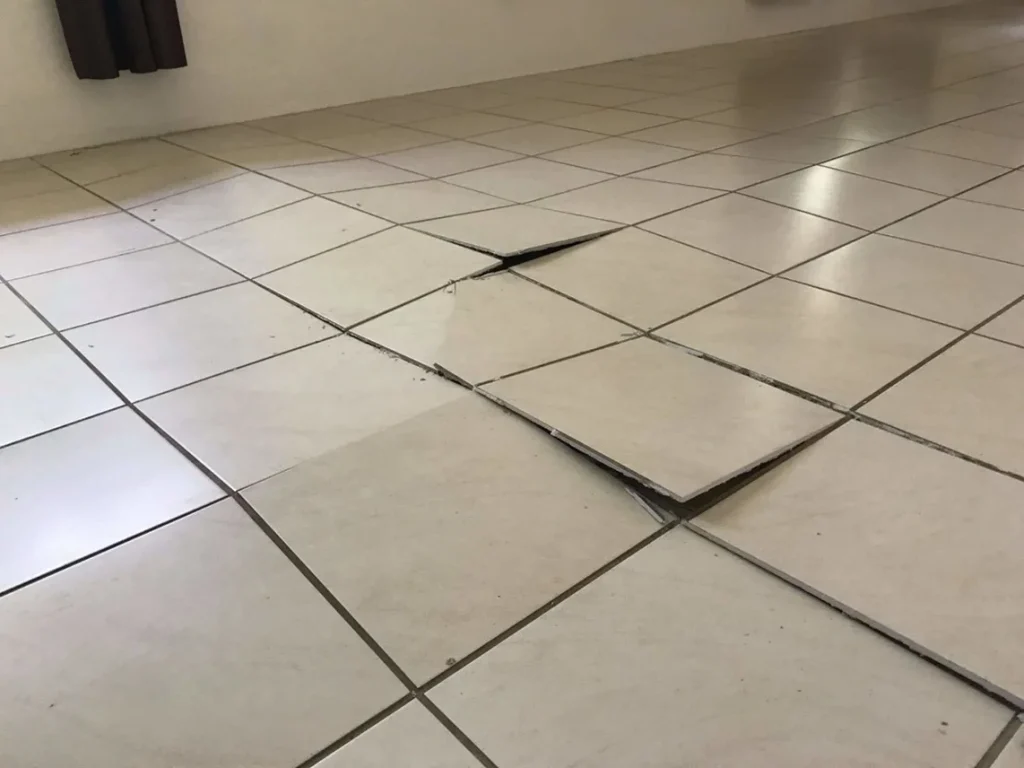
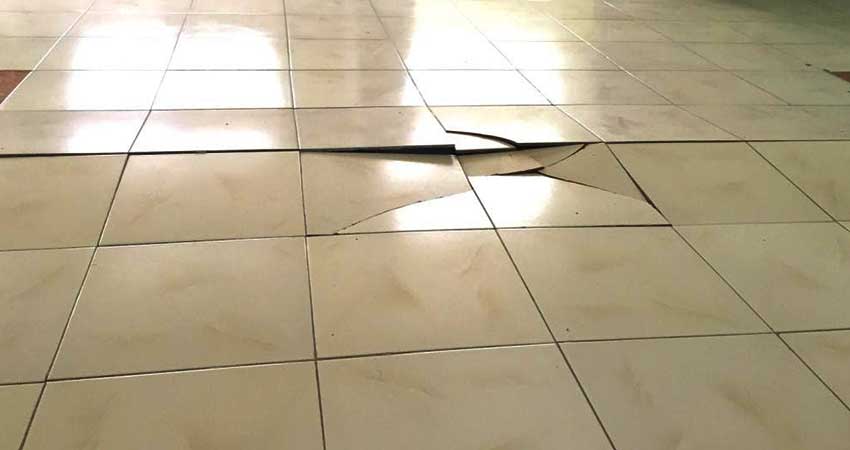
When clay soil beneath the paving swells, it doesn’t apply pressure evenly to all tiles. Typically, tiles crack in the middle or their edges crumble. If the cracks look more like bending and rising than sudden breaking, that again points to the slow, gradual pressure of clay soil.
Fifth: the smell or color of the soil
Clay soil is usually reddish, brownish, or yellowish, and when wet it gives off a distinct smell like damp, musty earth. Sandy soil is lighter in color and has no particular smell. If you see such soil when digging up the floor, there’s no doubt left.
But be careful — it’s not always the soil’s fault
Sometimes the heaving has nothing to do with clay soil. It could be that a water pipe under the yard has burst and is constantly feeding water beneath the paving, or the groundwater table has risen, or the drainage is clogged and water is accumulating under the floor. The way to tell is to see whether the heaving happens only after rain, or whether the floor is rising all the time, even without rain. If it’s constant, look for a broken pipe or faulty drainage. If it’s only after rain, the culprit is clay soil.
How can we prevent clay soil from swelling before laying the paving?
If you are about to pave your yard for the first time, or if you’re building a new property’s yard, you have a golden opportunity to prevent the problem. There are a few simple measures that, if you do them now, you will never experience floor heaving or tilting flowerpots.
First: replace clay soil with sandy soil
The best and most reliable method is to remove the clay soil layer from beneath the yard. Excavate to a depth of thirty to forty centimeters from the surface and replace it with sandy, granular soil. Sand allows water to pass through and does not swell. This costs money, but you do it once and you’re worry-free for years.
Second: lay a bed of gravel and crushed stone underneath
If you can’t replace all the soil, at least put down a twenty-centimeter layer of coarse gravel and crushed stone over the clay. This gravel layer acts as a buffer. Rainwater that seeps through the paving, instead of reaching the clay directly, spreads among the stones and has a chance to drain away.
Third: slope the floor properly
Wherever water pools, problems arise. Build the yard floor with a gentle slope directing water toward one or two drainage points. The standard slope is about one to two centimeters per meter — meaning over a distance of ten meters, the floor should drop ten to twenty centimeters.
Fourth: install subsurface drainage
Drainage consists of perforated pipes laid deep beneath the surface. These pipes collect excess water and direct it to a dry well or outside the yard. Good drainage acts like a respiratory system for the soil beneath the yard. It removes water quickly from below and prevents the clay soil from becoming saturated and swelling.
Fifth: fill the joints with waterproof grout
Ordinary cement grout allows water to pass through over time. Use polymer or epoxy grouts instead. Once dry, these grouts create an impermeable layer between the tiles. Water cannot seep through them and reach below the paving.
Now we move on to the final section.
Now that our yard has heaved, what's the solution?
Keep in mind that before any repairs, be sure to consult a specialist and confirm the problem!
If the problem is mild and only a few tiles have risen, remove those sections, take out the clay soil, and fill the area with sand and gravel. Then put the tiles back in place.
If the problem is moderate, remove a few lines of paving and install a drainage pipe beneath them. The excess water will drain away, and the pressure on the clay soil will be reduced.
If the problem is severe and most of the floor is damaged, there is no choice but to completely demolish it. Remove the entire floor. Excavate and discard the clay soil. Replace it with sand and gravel, then install new paving.
One important note: before doing anything, wait until the ground is completely dry. If you work on wet soil, the floor will become uneven again once it dries.
Final word: find the root cause. If it’s clay soil, you must keep water away from it. Drainage, proper sloping, or soil replacement are the ways to solve this problem. Prevention is always cheaper than cure.