
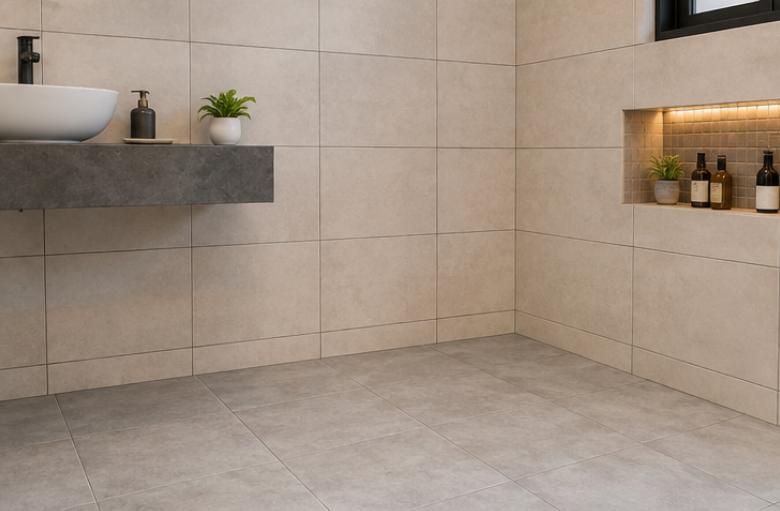
Powder tile adhesive: from preparation to proper application — accordingly, a complete guide
Using powder tile adhesive has become one of the most common methods for installing tiles and ceramics in recent years. However, many problems — such as tile detachment, voids behind the tile, or reduced bonding — do not necessarily come from choosing the wrong product. In fact, improper adhesive application can cause such problems.
In this article, we will examine step by step what powder tile adhesive is, what advantages and limitations it has, and which surfaces it suits. We will also explain key points of surface preparation, how to use powder tile adhesive, and common mistakes during application. Furthermore, we will review proper drying time and tips that can increase tiling durability. By the end, you will have a complete view of how to properly apply this type of adhesive.
In this article, we will cover the following topics:
What is powder tile adhesive, and how does it differ from other types?
Which surfaces is powder tile adhesive suitable for?
What should you do before using powder tile adhesive?
What tools do you need for applying powder tile adhesive?
What is the correct water-to-adhesive ratio?
Step-by-step use of powder tile adhesive
What points should you follow after tile installation?
Most common mistakes when using powder tile adhesive
Frequently asked questions about using powder tile adhesive
Powder tile adhesive — what is it, and why is it so popular? Accordingly, here's why
If you plan to install tiles or ceramics, you have probably heard the name powder tile adhesive many times. This product has largely replaced traditional mortar in recent years. However, the reason is not just easier application. High bonding strength, efficient consumption, cleaner application, and greater durability have led both contractors and homeowners to choose this type of adhesive more often.
Powder tile adhesive is a mixture of cement, graded mineral aggregates, and polymer additives, produced in powder form. To use it, simply add a specific amount of water to the powder to obtain a uniform, ready-to-apply mortar. The presence of polymers in this mixture increases bonding strength compared to sand-cement mortar. It also performs better against moisture, temperature changes, and normal stresses. This structure also allows application with less thickness, without adding extra load to the structure.
Today, this type of adhesive is used for installing various tiles, ceramics, and in many cases porcelain tiles on surfaces like concrete, cement, floors, and walls. However, not every adhesive suits every condition. You must choose it based on tile size, installation location, ambient moisture, and substrate type. Therefore, before starting, knowing how to use the adhesive is not enough. In fact, understanding its features is also very important.
In the following sections, besides teaching how to use powder tile adhesive, we will examine which surfaces it suits, what points to follow before application, and what mistakes can reduce tile strength and lifespan.
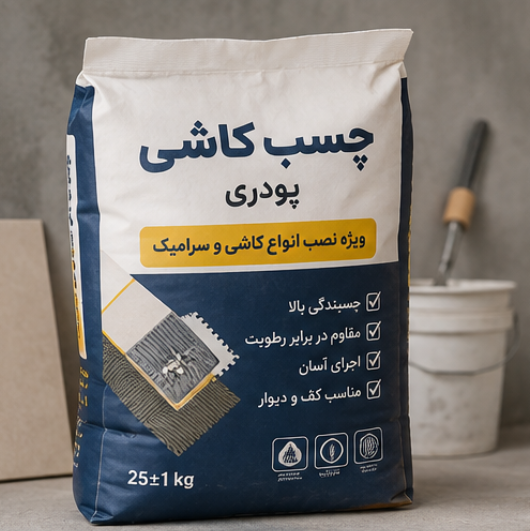
Powder tile adhesive vs. cement mortar — accordingly, what's the difference
One question that comes up for many people before buying or installing tiles is whether powder tile adhesive is better than cement mortar. At first glance, both methods may seem useful for tile installation. However, they differ significantly in performance, application method, and durability.
Difference in preparation and application quality
In the traditional method, workers prepare mortar on-site by mixing cement, sand, and water. Therefore, its quality depends largely on the correct mixing ratio and the skill of the person preparing it. If the water amount is more or less than standard, or if the mortar is not mixed well, the necessary bonding may not form. As a result, tiles may loosen or detach in the future.
In contrast, factories produce powder products with a specific formula. The manufacturer combines all raw materials in precise proportions. During application, you only need to add the right amount of water. This ensures consistent quality with every use and reduces the chance of preparation errors.
Difference in application thickness and substrate conditions
Another important difference relates to application thickness. Cement mortar is usually applied in a thick layer and is mainly used for correcting surface unevenness. However, powder adhesive is designed for surfaces that are already leveled and prepared. It creates a very strong bond with less thickness. As a result, material consumption decreases, and less extra weight is added to the structure.
Powder tile adhesive — pros and cons? Accordingly, here's the breakdown
Before using powder tile adhesive, it is better to become familiar with its strengths and limitations. Many people assume this product is the best choice for every condition. However, in practice, every application method has its own advantages and disadvantages. When you know under what conditions powder tile adhesive performs best, you will make a more accurate choice. As a result, you can prevent problems like tile detachment or cracking.
Advantages of powder tile adhesive
The most important advantage of this product is its high bonding strength. Therefore, with proper application, it can create a strong bond between the tile and the substrate. This reduces the likelihood of tile loosening.
Another advantage is fast and clean application. Unlike traditional mortar, which takes time to prepare, you prepare powder tile adhesive simply by adding a specific amount of water. Also, because it is applied in a thin layer, material consumption decreases, and cleaning the work area becomes easier.
Other advantages of this adhesive include:
Suitable bonding for various tiles and many porcelain ceramics
Reduced application thickness and therefore lower final weight
Consistent quality due to factory production
Proper moisture resistance in models designed for wet areas
Reduced risk of voids behind the tile with proper application
Disadvantages of powder tile adhesive
Along with its advantages, this product also has limitations you should not ignore.
For example, powder tile adhesive is not a replacement for substrate preparation. If the substrate is uneven or has significant height differences, you must first correct it and then apply the adhesive. Applying adhesive on an unsuitable surface reduces the final quality.
Also, you must mix this adhesive with water according to the manufacturer’s instructions. Adding too much or too little water can reduce its bonding strength. In addition, after preparation, the adhesive has a specific working time. You should not dilute it with water again after it has set.
Overall, when you choose the right adhesive type, prepare the substrate properly, and follow proper application steps, powder tile adhesive is one of the most reliable and durable methods for tile and ceramic installation. Therefore, it has become a common standard in many construction and renovation projects today.
Which surfaces is powder tile adhesive suitable for? Therefore, let's find out
One common mistake is assuming this product can be used on any surface. However, the final quality of the work depends not only on the adhesive type but also on the substrate material and condition. If you do not choose a suitable surface for application, even the best adhesive cannot create proper bonding.
In general, powder tile adhesive performs best on surfaces that are solid, clean, dry, and dust-free. Surfaces like concrete, cement mortar, cement floors, and walls covered with cement or suitable render are among the most common substrates for adhesive tile installation.
In renovation projects, if old tiles are firmly attached to the surface with no loosening or breakage, you can often install new tiles over them using the right adhesive. However, in these conditions, surface preparation is extremely important. You must remove grease, dirt, and any factor that prevents bonding.
On the other hand, not all surfaces are suitable for direct use of this adhesive. For example, loose, painted, plaster, or deeply cracked surfaces usually require preparation or correction. If you install tiles on these surfaces without proper substrate work, the likelihood of future detachment increases.
Therefore, before starting, it is better to first check the substrate condition. If the surface has adequate strength and you prepare it properly, this adhesive can create a durable and reliable bond. In the next section, we will fully examine what steps you should take before using it to achieve the best tile installation results.
How to use powder tile adhesive — therefore, the correct application steps from start to finish
Now that you are familiar with the features and applications of powder tile adhesive, it is time to examine its application steps. Following the correct order of steps is very important. Even if you use a high-quality adhesive, improper application can reduce bonding and cause tile detachment in the future.
Prepare the substrate
The first and most important step is substrate preparation. The surface must be solid, level, clean, and free of dust, grease, paint, or loose particles. If the substrate has deep cracks or major unevenness, repair it first. After it dries, begin adhesive application.
Mix the adhesive with the right amount of water
At this stage, the water amount must match the instructions on the product packaging. Adding too much water reduces adhesive strength. Too little water prevents the adhesive from spreading properly on the surface.
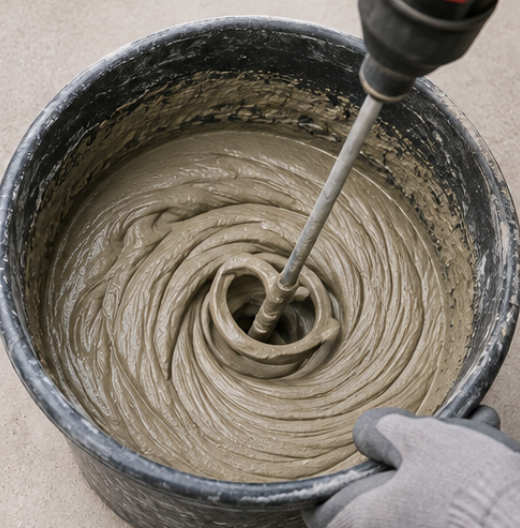
To mix the adhesive, it is better to use a low-speed electric mixer so the mortar becomes completely uniform. After preparation, allow the adhesive to rest for about 5 to 10 minutes so its additives activate properly. Then, mix it once more.
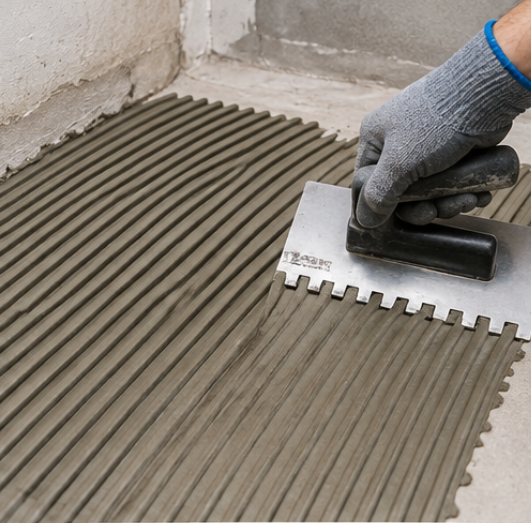
Apply the adhesive with a notched trowel
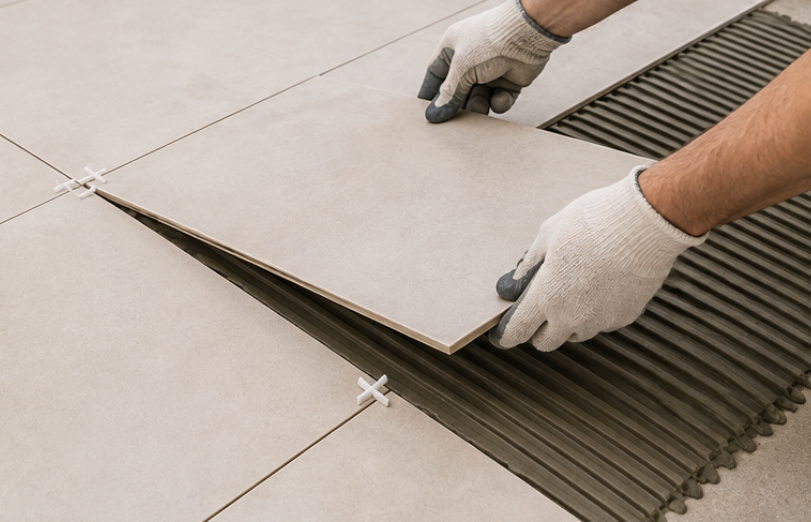
Spread the adhesive on the surface with the flat side of the trowel. Then, create uniform grooves with the notched side. These grooves help the adhesive spread evenly behind the tile when pressed, leaving no voids.
At each stage, apply only as much adhesive as you can cover with tiles before initial drying begins.
Place the tile in position
Place the tile on the adhesive and fix it in its final position with slight pressure or a back-and-forth motion. At this stage, you can adjust tile spacing using a level and tile spacers to achieve an even and orderly final result.
After installation, avoid impact or load on the tiles until the adhesive reaches initial strength. Also, perform grouting only after the adhesive has dried sufficiently.
Following these few simple steps greatly affects the final quality of the tiling. As a result, powder tile adhesive will deliver its maximum performance and durability.
Conclusion
Using this adhesive will deliver the best results when, in addition to choosing the right product, you also follow the application steps correctly. Substrate preparation, the correct water-to-adhesive ratio, using the right tools, and proper tile installation all play an important role in increasing bonding and tiling durability.
If you follow the points covered in this article, you can use powder tile adhesive with greater confidence and prevent future problems like tile loosening or detachment.