
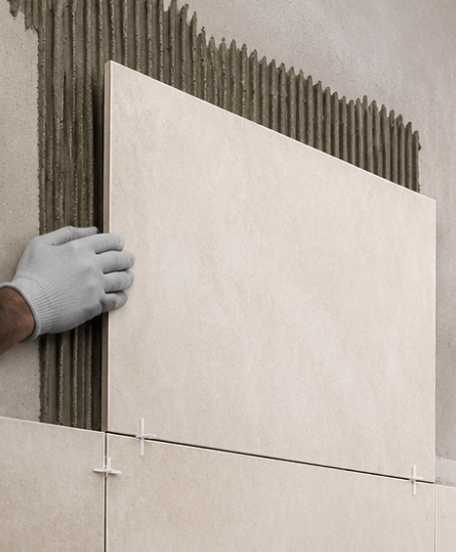
Best tile adhesive for porcelain ceramic — accordingly, what you need to know
If you are planning to install porcelain ceramic, the first question that probably comes to mind is: what is the best tile adhesive for porcelain ceramic? At first glance, you might think all tile adhesives perform the same. However, the truth is that choosing the wrong adhesive can cause problems such as detachment, reduced strength, cracking, and even costly rework for repairs and reinstallation.
In this article, we will examine how porcelain ceramic differs from ordinary ceramics and why it requires a suitable adhesive. We will also explore the features of a standard tile adhesive, compare different adhesives suitable for porcelain, and explain key tips to help you choose the best option based on the installation location.
This article will answer the following questions:
Why can’t you use just any tile adhesive for porcelain ceramic?
What features should the best tile adhesive for porcelain ceramic have?
Is powder tile adhesive better or paste adhesive for porcelain installation?
Which adhesive should you use for installing porcelain ceramic on floors and walls?
What should you consider when buying tile adhesive for porcelain ceramic?
Common mistakes in adhesive selection and application that cause porcelain ceramic detachment.
Ultimately, what is the best choice for increasing the durability and longevity of porcelain ceramic?
Why not every tile adhesive works for porcelain ceramic — accordingly, here's why
Many people assume that the same tile adhesive can be used to install any type of tile or ceramic. However, porcelain tiles are quite different. Due to their dense structure and very low water absorption, porcelain tiles require an adhesive with high bonding strength. Otherwise, you may eventually encounter problems such as loose or detached tiles.
Porcelain tiles are manufactured at very high temperatures, which gives them a dense, low-porosity surface. This characteristic increases their strength and durability, but it also makes them more difficult to bond to a surface. Unlike conventional ceramic tiles, porcelain does not absorb the moisture from the adhesive. Therefore, using standard adhesives does not always produce the desired results.
Sometimes, everything may appear normal immediately after installation.
However, problems can become apparent over time. Hollow sounds beneath the tiles, loose tiles, cracked grout joints, and even tiles separating from the floor or wall are among the most common issues caused by choosing an unsuitable adhesive. In addition to repair costs, these problems can also result in significant time, effort, and inconvenience.
The issue becomes even more important when large-format porcelain tiles are used. These tiles are heavier and place greater stress on the adhesive. Therefore, the adhesive must not only provide high bonding strength but also offer suitable resistance to heavy loads, moisture, and temperature changes.
Ultimately, the quality of a tile installation does not depend solely on the installer’s skill. Choosing the right tile adhesive for porcelain tiles also plays a crucial role in the durability and strength of the installation. When an adhesive is selected based on the specific characteristics of porcelain, the risk of problems such as tile detachment or loosening can be significantly reduced. Therefore, understanding the characteristics of a suitable adhesive is the first step toward achieving a proper and long-lasting installation.
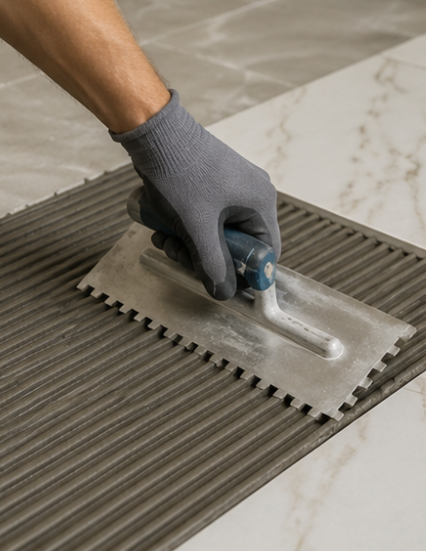
Best tile adhesive for porcelain ceramic — what features matter? Accordingly, here's what to look for
Now that we understand why porcelain ceramic requires a special adhesive, the more important question is: what features should a suitable tile adhesive for porcelain have? The truth is that not all adhesives on the market offer the same quality and performance. Therefore, before buying, it is better to be familiar with the most important features of a standard adhesive.
High bonding strength
The first and most important feature is high bonding strength. Since porcelain has very low water absorption, the adhesive must create a strong bond between the ceramic and the substrate without relying on moisture penetration. The higher the bonding strength, the lower the risk of ceramic detachment over time.
Water resistance
Another key feature is water resistance. If the ceramic is to be installed in areas such as bathrooms, showers, kitchens, or outdoor spaces, the adhesive must resist water and moisture penetration. Otherwise, its strength will gradually degrade over time.
Flexibility
Flexibility is also an important characteristic. Buildings are constantly subject to temperature changes, minor settlement, and expansion and contraction. A high-quality adhesive must be able to withstand these changes and prevent cracking or detachment.
High load-bearing capacity
If you are using large-format porcelain tiles, it is better to choose an adhesive with high load-bearing capacity. This is especially important for wall installations, because the adhesive must hold the weight of the ceramic without slipping or falling.
Final advice
Finally, when buying, do not focus only on price. Technical specifications, product standards, and suitability for the installation area are more important. A standard tile adhesive may cost more initially, but it will prevent future repair and replacement costs and ensure a more durable and higher-quality final result.
Powder or paste tile adhesive for porcelain ceramic — which is better? Accordingly, here's the answer
One of the most common questions when buying tile adhesive is whether powder adhesive or paste adhesive is better. The answer depends on the type of ceramic and the installation area. However, when it comes to porcelain ceramic, one option is usually more suitable.
Powder tile adhesive
Powder tile adhesive is produced based on cement and polymer materials. It must be mixed with a specific amount of water before use. This type of adhesive offers very high bonding strength and performs well for installing porcelain ceramic on floors, walls, and even wet areas. It also provides strong resistance to moisture, temperature changes, and pressure. For these reasons, it is the preferred choice in most professional projects.
Paste tile adhesive
On the other hand, paste tile adhesive is ready to use and easier to apply. It is mostly used for installing standard tiles and light-duty projects in interior spaces. Although it is simpler to work with, its bonding strength is not as high as powder adhesive — especially for large-format porcelain tiles.
Which one to choose?
If you are installing large slabs or large-format porcelain tiles, a polymer-modified powder adhesive is usually the more reliable choice. This type of adhesive not only offers high bonding strength but also supports greater weight and performs better under various environmental conditions.
Final note
This does not mean paste adhesive is unsuitable in all cases. If you are using smaller tiles in a dry interior space, paste adhesive may meet your needs. However, for most porcelain ceramic projects, professionals typically recommend a high-quality powder tile adhesive, because it offers greater long-term durability and reliability.
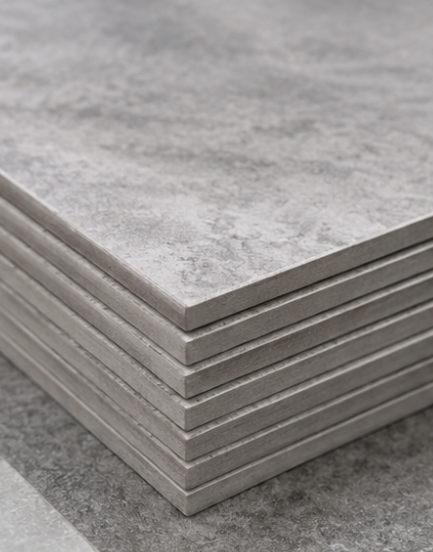
What adhesive for porcelain ceramic on floors and walls? Accordingly, here's the guide
Choosing the right tile adhesive does not depend only on the type of ceramic. The installation location also plays an important role. An adhesive that works well for floors may not be the best choice for walls or exterior spaces. Therefore, you should consider the project conditions before buying.
For floor installation
If you are installing porcelain ceramic on floors, the adhesive must withstand high pressure and heavy weight. Floors are constantly exposed to foot traffic, impact, and various loads. For this reason, polymer-modified powder adhesives are usually the more suitable choice. These adhesives offer high bonding strength and perform well under pressure and temperature changes.
For wall installation
For installing porcelain ceramic on walls, bonding strength is also very important. The adhesive must hold the weight of the ceramic without slipping. This is especially critical when installing large tiles or slabs. Using the right adhesive ensures that the ceramic stays firmly in place and does not detach over time.
For wet or outdoor areas
If the installation area is a bathroom, shower, kitchen, balcony, or exterior space, you should choose an adhesive with high resistance to moisture and temperature changes. In these environments, using standard adhesives may reduce bond strength over time and cause installation problems.
Final key point
In addition to choosing the right adhesive, substrate preparation is also essential. The surface must be clean, solid, and free of dust, grease, or loose parts. Even the best tile adhesive will not perform well on an unsuitable substrate. When the right adhesive and proper installation come together, you can expect the porcelain ceramic to remain problem-free for years.
Buying tile adhesive for porcelain ceramic — what to look for? Accordingly, key buying tips
Given the wide variety of tile adhesives available in the market, choosing a suitable product is not always straightforward. Many people focus only on price or brand name when buying. However, the most important factor is the compatibility of the adhesive with the type of ceramic and the installation area. If the wrong adhesive is chosen, even proper installation may not prevent future problems.
Check the product application
The first point to check is the intended use of the adhesive. Most product packaging specifies which type of ceramic it is designed for. If you are installing porcelain ceramic, it is better to choose a product specifically marked as suitable for porcelain or low-absorption ceramics.
Consider the installation location
The installation location is another important factor. For example, the adhesive used in a dry room may differ from what is needed in a bathroom, kitchen, or outdoor area. In wet environments or spaces with significant temperature changes, you should use an adhesive with high resistance to moisture and environmental stress.
Check bonding strength and weight capacity
If you are using large-format tiles or slabs, pay attention to the adhesive’s bonding strength and weight capacity. These tiles place more pressure on the surface. Therefore, standard adhesives may not deliver satisfactory results.
Check production date and storage conditions
Another important point is the production date and storage conditions. Adhesive that has been stored too long or under poor conditions may have lost its original quality. Therefore, always check the production date and packaging integrity before buying.
Get expert advice
Finally, if you are unsure about which adhesive to choose, it is better to consult a specialized seller or experienced installer. Choosing the right tile adhesive for porcelain ceramic may not seem very important at the time of purchase. However, in the long term, it will prevent repair, replacement, and reinstallation costs, and help your ceramic stay in place for years without problems.
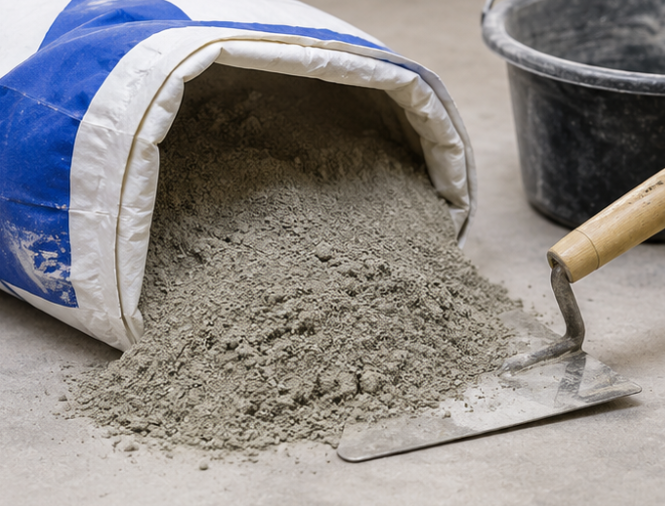
Mistakes in adhesive selection and application that lead to porcelain ceramic detachment — accordingly, key points to prevent
Even if you use the best tile adhesive for porcelain ceramic, failing to follow proper application principles can reduce the strength and durability of the installation. Many problems that appear after installation are caused by a few simple but important mistakes. These mistakes can be avoided with a little care.
Using the wrong adhesive
One of the most common mistakes is using the wrong adhesive. Some people choose cheaper adhesives that are not designed for porcelain ceramic. These adhesives usually lack sufficient bonding strength and cause the ceramic to loosen or detach over time.
Poor substrate preparation
Another common mistake is not preparing the surface properly. If the surface beneath the ceramic contains dust, grease, paint, or loose parts, the adhesive cannot form a strong bond. Therefore, the surface must be clean, dry, and even before installation begins.
Incorrect mixing ratio
Another frequent error is not following the correct water-to-adhesive ratio for powder adhesives. If you add too much or too little water, the adhesive quality decreases, and its final strength is affected. Therefore, always follow the manufacturer’s instructions carefully.
Improper use of the notched trowel
Using the notched trowel incorrectly can also cause problems. If the adhesive is not spread evenly, voids will form beneath the ceramic. Over time, these voids lead to hollow sounds, cracking, or even breakage.
Delayed installation after mixing
Some people wait too long after mixing the adhesive before installing the tiles. In such cases, the adhesive surface begins to dry, and its bonding strength decreases. Therefore, the adhesive should be used within the recommended time frame.
Final reminder
Finally, adhesive quality and proper installation go hand in hand. If either one is ignored, the risk of detachment, loosening, or cracking of porcelain ceramic increases. Following these simple points plays a significant role in extending the life and durability of the ceramic.
Conclusion
Choosing the best tile adhesive for porcelain ceramic depends on factors such as ceramic type, installation location, and environmental conditions. However, in most projects, polymer-modified powder adhesives are a more reliable choice due to their high bonding strength, proper resistance, and greater durability.
In addition to choosing the right adhesive, proper application and correct surface preparation are also very important. If these two are done correctly, the porcelain ceramic will maintain its quality and strength for years without loosening or detachment.