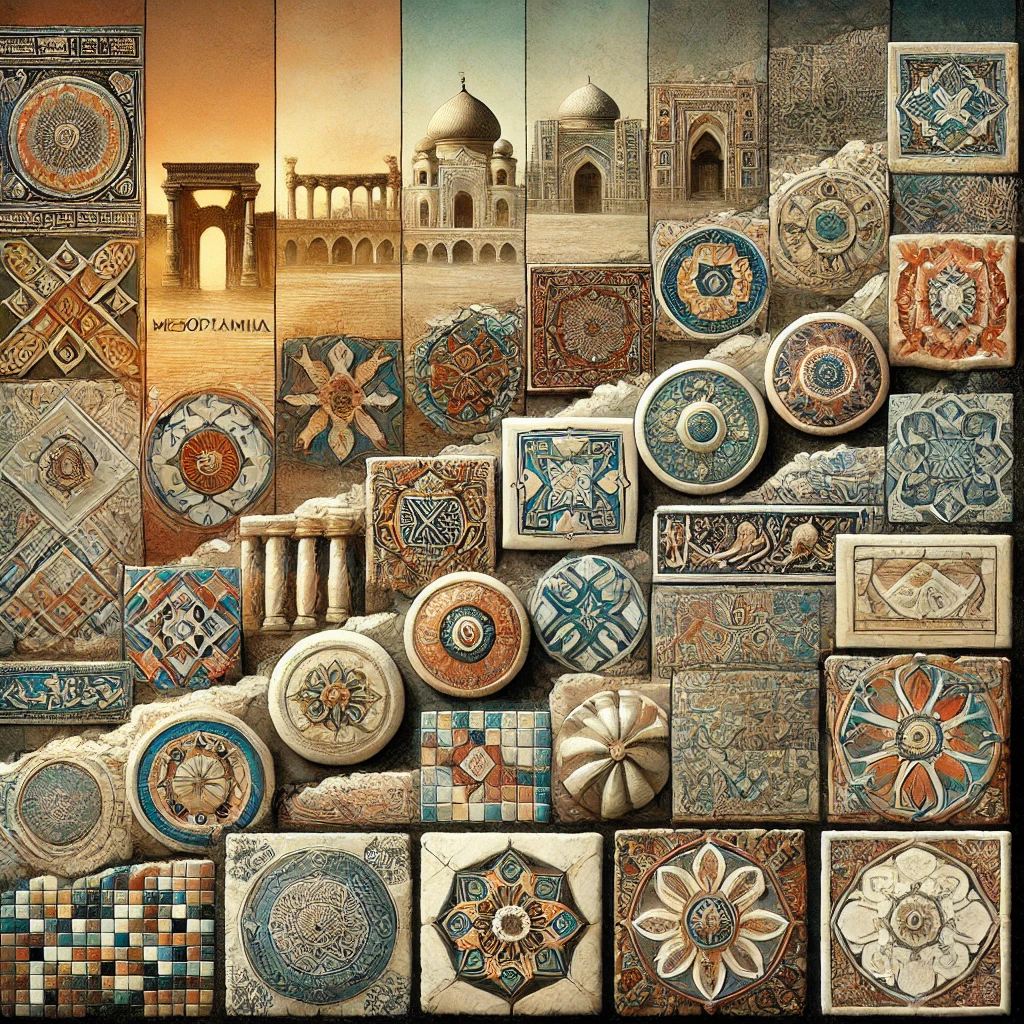
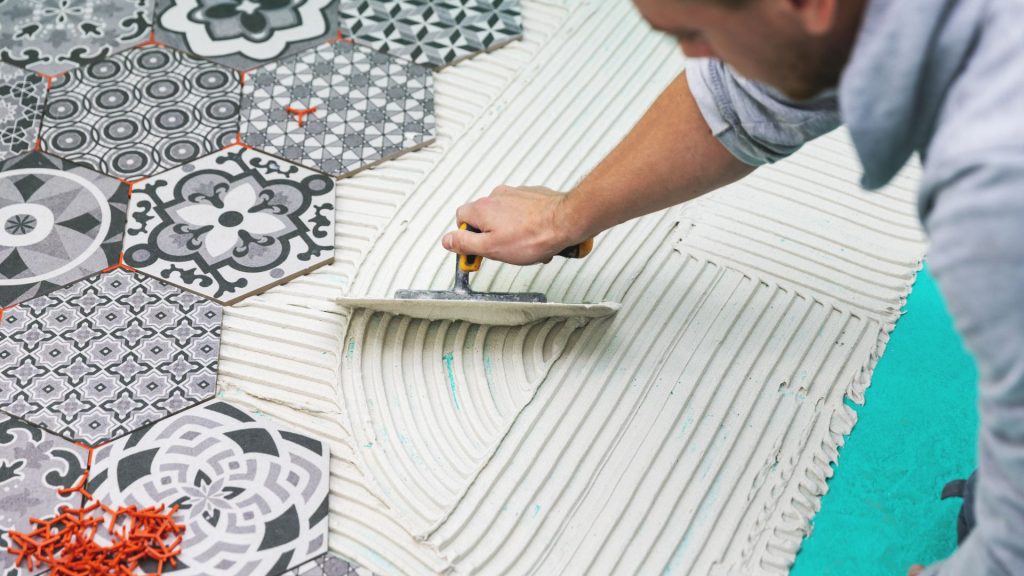
History of Tile – Tiles have been used for centuries as decorative items inside and outside buildings of all types, including homes, businesses, places of worship, etc. Ceramic tiles are one of the oldest forms of decorative art. They have been sought after for centuries due to their durability and stunning beauty.
Hand-made and hand-painted ceramic tiles have been used around the world since ancient times. Clay, a natural material, is easily found and is made into decorative tiles. The resulting tiles are durable and attractive – the same qualities that draw us to ceramic tiles in modern times.
Ancient History of Tiles and Ceramics
The first use of decorative tiles was found in Egypt, dating back to around 4000 BC. Tiles were also made by the Assyrians and Babylonians. The Romans and Greeks also favored decorative tiles. You will find examples of beautiful tiling in mosaics, frescoes, and more.
One of the earliest uses of tile can be found in the Elamite temple at Chogha Zanbil, dating from the 13th century BC. Another beautiful example is the Ishtar Gate of Babylon, dating from 575 BC. The Achaemenid Empire also decorated buildings with glazed tiles. Decorative tiles were also popular with the Sassanid Empire, and were used in geometric designs including flowers, plants, birds, and people.
Islamic period
During the Islamic period, decorative ceramic tiles became popular. They were often used as decorations for the exterior and interior of buildings. You will find beautiful tilework in places such as Tunis (9th century), Kashan, Iran (11th century), and many mosques dating from the 12th century onwards. Beautiful examples of Islamic tiles include the Seyyed Mosque of Isfahan circa 1122 AD, the Maragheh Dome (1147 AD), and the Jame Mosque of Gonabad (1212 AD).
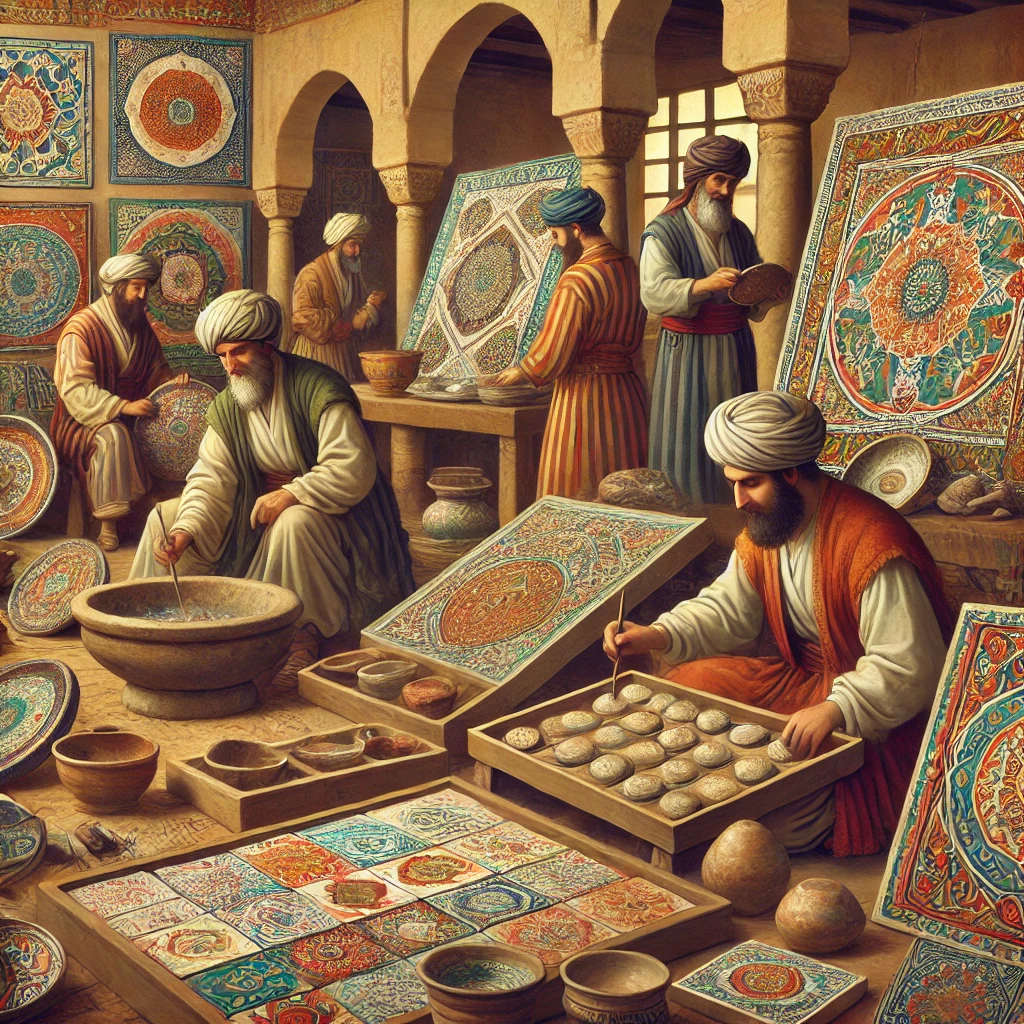
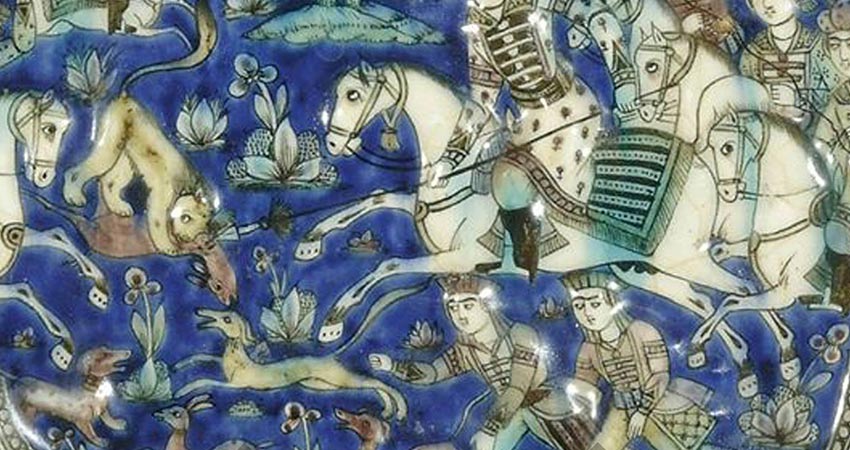
Some of the finest and most intricate tiling was done during the Timurid Empire of Iran. Artists used the muraq technique. In this technique, single-colored tiles were cut into small shapes and placed together with plaster between them to create panels. After drying and hardening, these panels were placed together on the walls of buildings. These panels were used not only on flat surfaces, but also to cover the interior and exterior surfaces of domes.
The Middle Ages and Tile in Europe
It was not until the Middle Ages that decorative tiles became popular in Europe. They first spread from Spain, during the time of the Moors, and then to neighboring countries, and eventually to the rest of Europe. Tiles were expensive and only used by the wealthy who could afford them, especially royal families, churches, and ecclesiastical institutions.
Encaustic tiles became popular in Europe. These were made from several colors of clay, then shaped and fired together to form patterns. The design was not only on the surface, but also went right through the thickness of the tile, making the design durable and not easily removed.
Painted tiles were also common in medieval Europe. Again, many of these were used in churches and other religious institutions. The tiles were painted with scenes from the Bible, becoming a kind of “bible” that illiterate people could “read.” Letter tiles were another popular choice and were often used to create Christian texts on church floors.
The tiles remained popular until the 1600s and beyond. In the 17th and 18th centuries, the Netherlands became an important center for decorative tiles with its Delftware tiles. Delftware tiles were famous for their cobalt blue and white colors. Delftware tiles were popular in Europe and around the world, including in the American colonies. Colonists commissioned Delftware tiles to use as decorative tiles around fireplaces and even on the walls of their homes.
Decorative tiles and the Industrial Revolution
The Industrial Revolution is best known for its shift to new manufacturing processes, which replaced the need for everything to be manufactured by hand. This period was a time of technological innovation, especially in Britain. The British used the manufacturing process to mass-produce ceramic tiles, which made them more affordable for the middle class. Hand-made, hand-painted tiles remained popular, but the mass production of ceramic tiles helped people enjoy their lasting beauty.
During this period, patterned tiles continued to be popular, not only used to decorate churches and buildings, but were increasingly used in domestic homes. In the home, tiles were popular for use in hallways, bathrooms, and were seen as a sanitary benefit for kitchens.
20th century and decorative tiles
In the early 20th century, tiles continued to be popular. Especially subway tiles, which were originally made and used on the walls of New York City subway stations. Subway tiles were usually white and were often used in kitchens and bathrooms. History of Tile
Another early 20th century trend was decorative tiles influenced by the Art Nouveau and Art Deco styles, which were popular between 1900 and 1940. These tiles featured bright colors and rich designs and were used in a variety of architectural settings.
The 21st Century and Beyond
These days, decorative ceramic tiles remain popular and are used as stunning displays both indoors and outdoors in homes, businesses and institutions. Modern tiles are available in a wide range of colors and can be ordered for everything from swimming pools and exterior walls to bathrooms, kitchens and even interior wall art.
You can find handmade and hand-painted tiles, or you can even opt for digitally printed tiles – all with the design of your dreams. Your imagination is the only limit to what you can create with today’s stunning tiles.
تاریخچه کاشی