
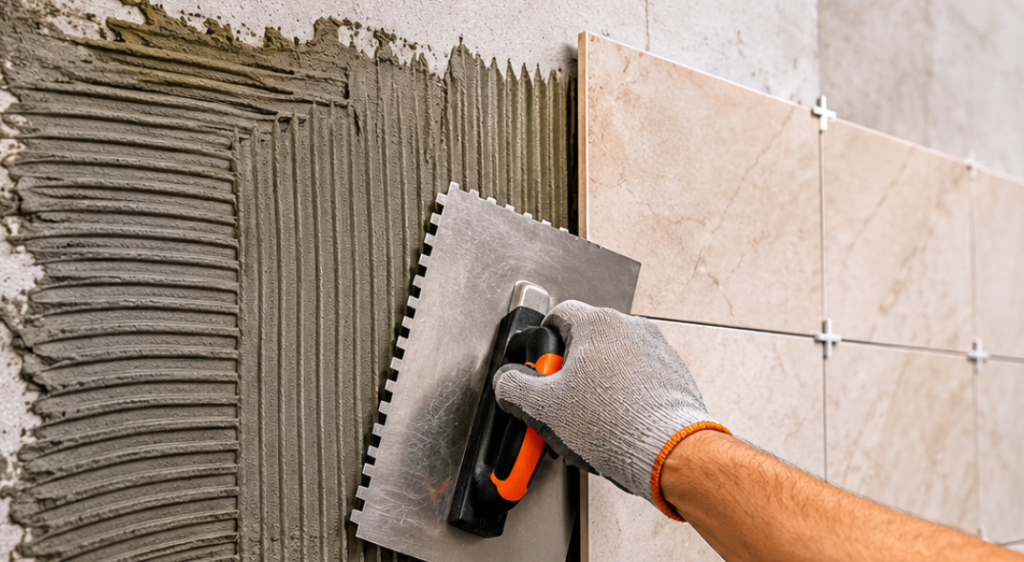
How long does adhesive curing take, and why does it matter for durability? Accordingly, here's the answer
In tile and ceramic installation, adhesive curing is not just a minor step. In fact, proper timing of adhesive curing determines the final quality of the work. Many problems — such as tile movement, reduced bonding, gaps between tile and substrate, or even tile detachment over time — occur because adhesive curing time was ignored.
In this article, we will examine what adhesive curing actually means, how it differs from ordinary drying, and why understanding the right timing of adhesive curing is essential for proper tiling. We will also review the factors that change adhesive curing speed, common mistakes during tile installation, and ways to prevent quality loss.
Throughout this article, we will cover the following topics:
What is adhesive curing, and why does it matter for tile installation quality?
The difference between adhesive curing time, drying time, and workability time
What factors change the speed of adhesive curing?
What happens if tiles are moved before adhesive curing is complete?
How can we tell that adhesive curing has reached the right stage?
The effect of temperature and humidity on adhesive curing speed
The goal of this article is to help you better understand adhesive curing, carry out tile installation more precisely, and prevent problems that appear after the work is finished.
What is adhesive curing, and why does it affect tile installation quality? Accordingly, here's why it matters
In tile and ceramic installation, initial bonding strength is not the only important factor. In fact, the timing and behavior of the adhesive during installation also have a major impact on final quality. One of the most important things to pay attention to is adhesive curing time.
Adhesive curing is a process in which the adhesive gradually moves from a soft, adjustable state and forms a stronger bond between the tile and the substrate. This stage is different from complete drying. Specifically, the adhesive may not have reached its final strength yet, but an important part of the setting process has already begun.
The impact of adhesive curing on installation quality
Proper adhesive curing time allows the installer to make necessary adjustments after placing the tile. These include leveling, adjusting tile spacing, and aligning the surface. If the adhesive sets too quickly, the time for tile adjustment decreases, and the risk of installation errors increases.
On the other hand, if adhesive curing takes too long, bonding quality drops. The adhesive must be able to hold the tile in place at the right time. Therefore, respecting the proper adhesive curing window helps form a better bond between tile and substrate. As a result, problems like loosening or detachment in the future are reduced.
For this reason, understanding the factors that affect adhesive curing and respecting the right timing is one of the key points for a durable and professional tiling job.
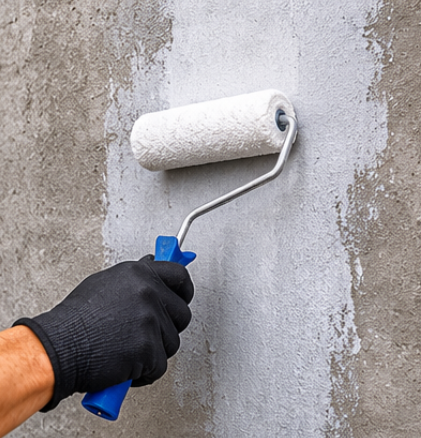
What is the difference between tile adhesive curing time and its drying time? Therefore, let's clarify
One common mistake in tiling is confusing adhesive curing with complete drying. Many people assume that when the adhesive surface feels dry, the bonding process is finished. However, these two stages are quite different, and understanding them can prevent many installation problems.
Curing happens when the adhesive begins to harden and can hold the tile in place. At this stage, the material moves out of its initial state, and the bond between tile and substrate gradually becomes stronger. However, it has not yet reached final strength. Therefore, movement or excessive pressure on the tile can damage the bond.
Complete drying, on the other hand, is the stage where moisture in the adhesive structure decreases, and the material reaches a large part of its final strength. This process usually takes longer than initial curing. Moreover, environmental conditions such as temperature, humidity, and layer thickness affect it.
Why does the difference between these two stages matter?
During tile installation, the installer must know when to adjust the tile and when to avoid moving it. If the tile moves before curing reaches the proper stage, the bond between adhesive and substrate may weaken.
Also, do not assume that the tile is completely fixed once curing begins. Reaching final strength takes more time. Therefore, the right time gap for grouting, applying pressure on the surface, or using the newly tiled area is very important.
As a result, paying attention to the difference between curing and complete drying helps you carry out tiling steps more precisely and improves the final quality of the work.
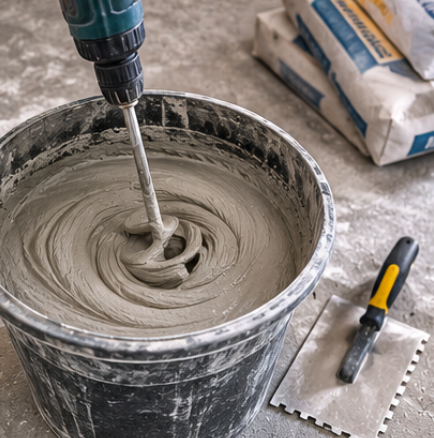
What affects tile adhesive curing time? Accordingly, here are the key factors
Proper curing time is not always a fixed value. In fact, different conditions can change its speed. Therefore, you cannot decide whether the adhesive is ready based on one specific time alone. Environmental factors, substrate type, and application method all affect adhesive performance.
The effect of temperature and humidity on curing
One of the most important factors affecting curing is the weather conditions at the installation site. In high temperatures, moisture in the adhesive is lost faster. As a result, the curing process may begin sooner than expected. This reduces the time for tile adjustment and can lower installation quality.
On the other hand, in cold or highly humid environments, the drying and curing process slows down. In such conditions, the adhesive needs more time to reach initial strength. Therefore, you must carry out installation steps more carefully.
The role of substrate and adhesive thickness
The condition of the surface where you install the tile also has a major effect on curing speed. Very dry and absorbent surfaces may quickly draw moisture from the adhesive and change the curing process. Therefore, proper surface preparation before application is essential.
Also, adhesive layer thickness can affect curing time. Using too much adhesive usually means the inner layer needs more time to reach proper strength.
The effect of tile adhesive type
The type of adhesive is another important factor. Different formulations cause different reaction speeds and curing times. Therefore, during application, consider the adhesive properties and the project’s environmental conditions.
Finally, understanding the factors that affect curing helps you better manage the right time for tile installation and adjustment. As a result, problems like reduced bonding or tile movement become less likely.
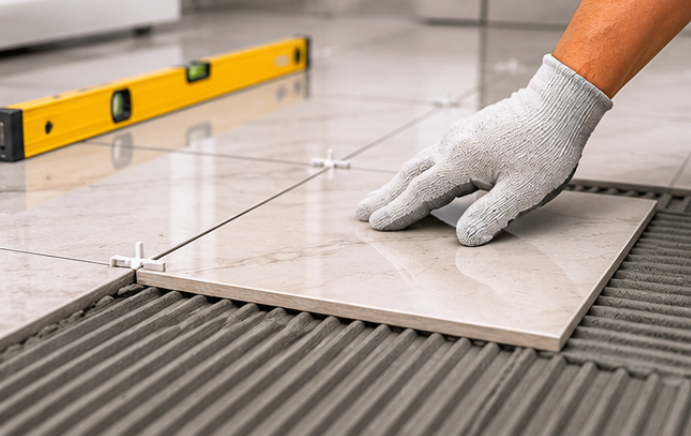
What happens if tiles move before adhesive curing finishes? Accordingly, here's the answer
One mistake that can happen during tile installation is moving the tile before curing reaches the proper stage. At first glance, shifting a tile by a few millimeters may not seem like a big problem. However, even these small movements can affect the final installation quality.
When the adhesive is still in its initial stage, the bond between the back of the tile and the substrate has not fully formed. In this condition, pressing or moving the tile can cause parts of the material to separate from the surface and reduce the contact area between adhesive and tile.
Reduced bonding and later problems
One of the most important consequences of ignoring proper curing time is reduced bond strength. If you move the tile several times before the adhesive sets, voids may form between the tile and the material. In the future, these voids can cause a hollow sound when tapping the tile or even detachment from the surface.
Also, repositioning the tile after curing has begun may cause the layer to lose its uniformity. As a result, part of the tile may not have enough adhesive underneath, and its strength will decrease.
How can we prevent this problem?
To prevent this, it is better to check tile positioning carefully before installation and apply the right amount of material to the surface. Also, allow enough time for tile adjustment while the adhesive is still workable.
Understanding curing behavior helps the installer know when to adjust the tile and when to avoid any extra movement. Following this simple point plays a key role in increasing the durability and final quality of the tiling.
How to know when tile adhesive curing time is right? Accordingly, here are the signs
Recognizing the right adhesive curing time is one of the skills that greatly affects tile installation quality. Many problems you see after the work is finished happen because you adjusted or pressed the tile before adhesive curing reached the proper condition.
However, this stage is not always recognizable by a clear visual change. In fact, it depends on factors like adhesive type, ambient temperature, humidity level, and substrate condition. Therefore, understanding adhesive behavior during application is very important.
Signs that adhesive has reached proper curing
One way to check adhesive condition is to observe how much the tile moves during adjustment. When the adhesive is still workable, you can shift the tile slightly with controlled pressure and make necessary adjustments. However, when adhesive curing begins, the tile shows more resistance to movement, and shifting it becomes harder.
You should also pay attention to the adhesive surface. If the adhesive on the substrate dries too much and loses its initial tack, bond quality drops. In this condition, installing a tile on such a layer reduces proper contact between tile and adhesive.
The importance of respecting workability time
The time you have to adjust the tile is usually known as workability time. This period comes before the adhesive reaches full strength and provides the opportunity to correct tile position.
Proper management of this time helps you install tiles more precisely. As a result, problems like uneven surface, irregular tile spacing, or reduced bonding do not occur. Therefore, paying attention to the signs of adhesive setting and matching your installation speed with environmental conditions is one of the key factors for a professional and durable installation.
How temperature and humidity affect tile adhesive curing speed — accordingly, the key points
Environmental conditions can change adhesive curing time. Even if you use the same adhesive type and application method, changes in temperature and humidity make the hardening process faster or slower. Therefore, check the site conditions before starting tile work.
The role of temperature in tile adhesive performance
Ambient temperature directly changes the reaction speed inside the adhesive. In warm environments, moisture in the adhesive is lost faster, and adhesive curing may begin sooner than expected. Such conditions reduce the time for tile adjustment. If you do not match your installation speed with the environment, bond quality drops.
On the other hand, low temperatures slow the drying and curing process. In these conditions, the adhesive needs more time to reach initial strength. Therefore, avoid applying pressure or moving tiles too soon.
The effect of humidity on curing time
Ambient humidity also changes adhesive performance. In high-humidity spaces, water in the adhesive escapes more slowly, and adhesive curing takes longer. However, excessive moisture on the substrate also reduces bond quality.
For better results, check environmental conditions before tile installation and adjust your timing based on temperature and humidity. Following this point helps the adhesive reach proper curing, and the bond between tile and substrate becomes stronger.
As a result, controlling environmental conditions is one of the key solutions for preventing installation problems and increasing tiling durability.
Conclusion
Adhesive curing is one of the most important stages in tile and ceramic installation. Ignoring it lowers the final quality of the work. The adhesive must reach the right condition at the right time, so that the tile can be adjusted and a proper bond forms between tile and substrate.
Throughout this article, we examined how adhesive curing differs from complete drying. Factors such as temperature, humidity, adhesive type, surface condition, and adhesive layer thickness all change its speed.
To achieve a high-quality installation, you must know the right timing for each stage and consider environmental conditions. Following the principles of adhesive curing helps you install tiles more precisely and gives them greater durability over time.