

Polymer stone adhesive vs. epoxy — which is better? Accordingly, here's the answer
When it comes to stone installation, crack repair, or bonding stone pieces, many people find themselves torn between two main options: polymer stone adhesive or epoxy adhesive. At first glance, both may appear to be simply “strong glues.” However, they have important practical differences. If you overlook these differences, you may face issues like loosening, discoloration, cracking, or even complete detachment over time.
In this article, we will closely examine the features of each adhesive, their ideal applications, and which one makes more sense for construction or decorative projects. We will also discuss resistance, durability, application methods, price, uses, and common mistakes. Therefore, by the end, you will be able to make a confident and informed choice.
What exactly is polymer stone adhesive, and what is it used for?
How does epoxy adhesive work, and why has it gained so much popularity?
Which adhesive performs better against moisture, heat, and pressure?
Which option is better for facades, floors, bathrooms, or stone countertops?
What are the differences in price and application between the two?
What should you look for when buying stone adhesive?
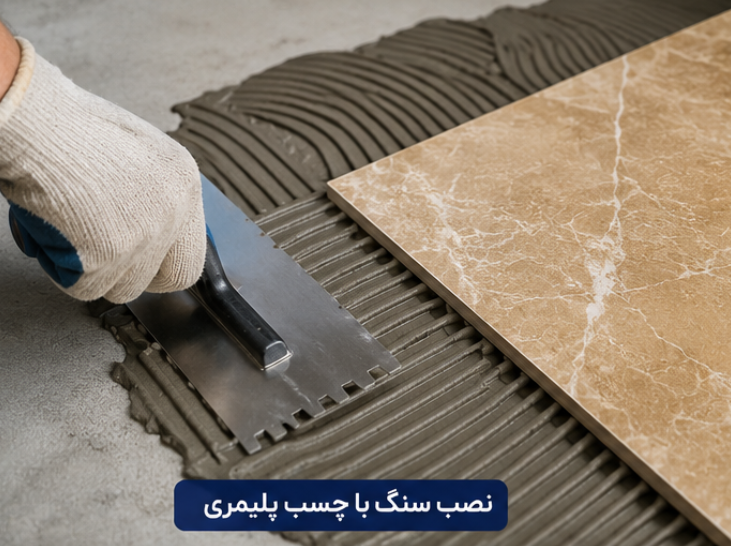
Why does choosing the wrong stone adhesive cause problems later?
Many problems seen in building facades, stone flooring, or even stone countertops are not related to the quality of the stone itself. Instead, the main issue starts when the wrong adhesive is chosen for the job. At first, everything may seem firm and clean. However, after a few months, problems gradually appear. Stones become loose, joints crack, moisture penetrates beneath the surface, or some pieces may even detach completely.
The truth is that each stone and each environment has its own specific conditions. For example, an adhesive that works well for interior stone installation may not be suitable for exterior facades. Likewise, a product that performs excellently in dry conditions may lose its resistance quickly in humid spaces. This is precisely why understanding the differences between polymer and epoxy adhesives becomes important.
One common mistake is that many people only focus on initial bonding strength. However, stone adhesive must also be durable over the long term. Consider a building that experiences extreme heat in summer and severe cold in winter. The facade stone constantly expands and contracts. If the adhesive lacks sufficient flexibility, cracks will develop over time, and the stone will detach from the surface.
On the other hand, in spaces like bathrooms, pools, or kitchens, moisture plays a major role. Some adhesives are water-resistant but weaken with continuous moisture exposure. This is where the wrong choice can lead to costly repairs and renovations.
Another important factor is stone weight.
The larger and heavier the stone, the more pressure it places on the adhesive. Using a standard adhesive for large, heavy stones — especially on facades — creates a dangerous risk. Detaching stones from a height is not just a cosmetic issue; it can also pose a safety hazard.
In addition, some people make decisions based solely on price. For instance, they choose a cheaper adhesive without considering its intended application. However, in practice, the cost of repairs and reinstallation will be many times higher than the initial price difference.
In the market, two options are most commonly used: polymer stone adhesive and epoxy adhesive. Each has its own advantages, limitations, and specific applications. Therefore, to make the right choice, you first need to understand the exact differences between these two adhesives and under which conditions each performs best.

What is polymer stone adhesive, and what are its exact advantages and disadvantages? Therefore, let's take a closer look.
What is polymer stone adhesive?
A combination of polymer materials, chemical additives, and mineral compounds used for strong bonding of stone to various surfaces. Available in powder or paste form, suitable for walls, floors, facades, and old surfaces.Why has it become popular?
Because it offers easier application, faster installation, and better durability compared to cement mortar. Today, it is considered a more reliable alternative to traditional methods.Key advantage: high flexibility
Buildings constantly undergo expansion and contraction. Polymer adhesive can tolerate these changes due to its structure, preventing cracking or stone detachment. This is especially important in facades exposed to daily temperature fluctuations.Lighter weight, faster execution
These adhesives are lighter than mortar, reducing the building’s dead load. They also create a strong bond with less thickness, increasing installation speed and resulting in a cleaner finish.Limitations and weaknesses
Sensitivity to environmental conditions: If the substrate is not properly prepared or the surface is not clean, adhesion may be reduced. Some people skip surface preparation and later face stone detachment.
Variable brand quality: Some products only carry the “polymer” label but use low-quality raw materials, reducing durability. They may look similar, but the difference in quality can completely change the longevity of the work.
Compatibility with stone type: Not every adhesive suits every stone. Heavy stones or those with low water absorption require more specialized adhesives. Mismatching can lead to bond failure.
Wet environments: In constantly wet areas like pools or industrial spaces, polymer adhesive alone may not be the best choice. In such cases, more resistant options like epoxy may be needed.
A common mistake: focusing only on initial strength
Many people only check initial bonding strength, but stone adhesive must also perform well over the long term. If the adhesive lacks flexibility, cracks will develop over time, and the stone will detach from the surface.Not all polymer adhesives are the same
Some are designed for installing stone over old ceramic tiles, some for facades, some for floors, and some for wet areas. Therefore, you cannot assume that just because it is called “polymer adhesive,” it is suitable for every project.Final takeaway
Polymer stone adhesive performs best when both product quality and proper installation are ensured. If the substrate is weak or the adhesive is chosen incorrectly, even the strongest product will not deliver satisfactory results.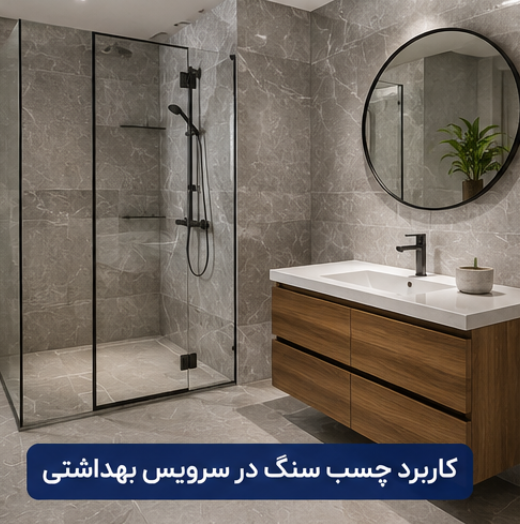
Epoxy adhesive: what is it, and why is it considered the strongest stone adhesive? Accordingly, here's why
What is epoxy adhesive?
When it comes to high strength and strong bonding, epoxy adhesive is almost always mentioned. Many consider it the best option for stone installation and repair, because it performs exceptionally well under tough conditions.
How does it work?
Epoxy adhesive typically consists of two main components: resin and hardener. These two materials are mixed together before application. After a chemical reaction, they form an extremely strong bond. As a result, this adhesive offers high resistance to pressure, moisture, and even certain chemicals.
Why is it considered the strongest?
One of its most important features is its high bonding strength. Therefore, it is widely used for installing heavy stones, large slabs, and projects requiring high durability. It creates a strong connection between stone and various surfaces, reducing the risk of detachment.
Performance in wet environments
Epoxy also performs well in humid conditions. For this reason, it is commonly used in pools, bathrooms, and industrial kitchens. Its high resistance to water ensures that its quality does not decline quickly with prolonged moisture exposure.
Limitations and challenges
However, epoxy also has some limitations. Its application is more sensitive compared to polymer adhesives. The mixing ratio must be precise. Furthermore, after mixing, it has a limited working time. If not applied quickly, the adhesive will harden.
Cost consideration
Another point is the higher price of epoxy compared to many standard adhesives. Therefore, it is not always the first choice for every project. In some cases, a high-quality polymer adhesive may be sufficient, and there may be no need for extra cost.
When to choose epoxy?
Epoxy is most suitable for projects with more demanding conditions — such as constant moisture, heavy stone weight, or high strength requirements. It is precisely in these situations that its real difference from other adhesives becomes clear.
Polymer vs. epoxy adhesive — which is better? Accordingly, a practical buying guide
After learning about the features of both adhesives, the main question now is: which is better — polymer stone adhesive or epoxy?
The truth is that the right choice depends entirely on the project conditions. Therefore, a single solution cannot be applied to all jobs.
Bonding strength
In terms of bonding strength, epoxy generally performs more powerfully. Therefore, it is a more reliable choice for heavy stones, large slabs, and spaces with high pressure or moisture.
Flexibility
On the other hand, polymer adhesives usually offer greater flexibility. They can better withstand temperature changes and minor building movements. This is especially important for building facades.
Water resistance
Both options perform well against water. However, epoxy shows greater durability in very humid environments such as pools or professional bathrooms.
Ease of application
In terms of application and ease of use, polymer adhesive is generally simpler. It works faster and is less sensitive to mixing ratios. In contrast, epoxy must be prepared and applied with more precision.
Price
Polymer adhesives are usually more cost-effective and work well for many construction projects. However, when the project involves more demanding conditions, the higher cost of epoxy becomes justifiable.
Final recommendation
If you value easier application, reasonable price, and high flexibility, polymer adhesive is a good choice. On the other hand, if maximum strength and durability under tough conditions are your priority, epoxy is generally the stronger option.
Facades, floors, or bathrooms — which adhesive works best? Accordingly, a practical guide
One common mistake is that some people think one type of adhesive works for all building areas. However, each space has different conditions, and this directly affects the adhesive choice.
For building facades
The adhesive must withstand temperature changes, rain, sunlight, and stone weight. In these conditions, high-quality polymer adhesives usually perform well due to their proper flexibility. However, if the stones are very large or heavy, some installers choose epoxy for extra strength.
For floors
Resistance to pressure and impact is very important. In normal environments, polymer adhesive can be sufficient. On the other hand, in high-traffic or industrial spaces where more pressure is applied, epoxy is a more reliable choice.
For wet areas
In spaces like bathrooms, showers, or pools, water resistance becomes more critical. In such conditions, epoxy generally performs better and shows greater durability with prolonged moisture exposure.
For stone countertops or interior decorative stones
The stone type and usage conditions also matter. In many interior projects, polymer adhesive is sufficient and delivers good results. However, if very high bonding strength or extra resistance is needed, epoxy is considered the more professional option.
Final recommendation
The best choice is made when stone type, environmental conditions, pressure, and moisture levels are all considered together — not just based on price or the name on the label.
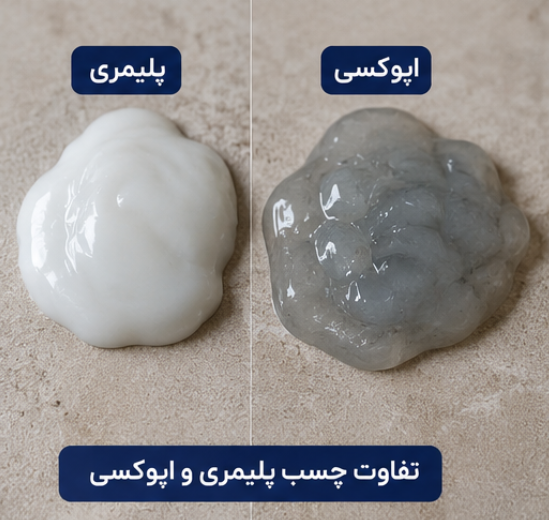
Conclusion: polymer or epoxy — which is better? Accordingly, the final verdict
If we want to give a short and practical answer, we must say that neither adhesive is the “best for all conditions” on its own. The right choice depends entirely on the project type, environmental conditions, and your expectations for durability and strength.
Polymer adhesive is usually the more suitable choice for typical construction projects, interior spaces, and jobs where easier application and lower cost matter. These adhesives offer good flexibility and deliver fully acceptable performance in many projects.
Epoxy adhesive, on the other hand, is used more for tougher conditions — where high resistance to moisture, pressure, or stone weight is important. For this reason, it is generally considered a more reliable option for pools, industrial environments, or installing heavy stones.
However, an important point is that even the best adhesive will not deliver good results without proper installation. Surface preparation, correct product selection, and proper application all have a major impact on the final durability.
Finally, if you ask yourself just one question before buying, the choice becomes much easier:
“Under exactly what conditions will this adhesive work?”
Once you have the answer to this question, the choice between polymer and epoxy becomes more logical and accurate.